Wildflower Seeding
Wildflower seeding is ideal for clients looking to enhance biodiversity or introduce vibrant colour, texture, and seasonal interest to a landscape, while also creating valuable habitats for local wildlife.
Hydraseeders specialise in both conventional hydroseeding and wildflower establishment, applying in-depth technical knowledge to ensure successful results. Every site and soil type is carefully assessed to determine the most appropriate seed mix and species blend, with soil amendments used where necessary to achieve optimal growing conditions.
Species selection takes into account colour, height, cost, climate, and existing habitat. Hydraseeders work closely with clients to recommend suitable mixtures based on extensive industry experience.
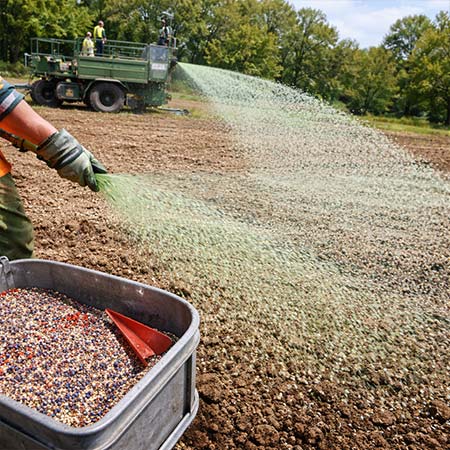
Precision is essential, particularly with fine or high-value wildflower seeds that may be sown at rates of less than one gram per square metre. Seed can be rolled to improve soil contact and germination, or applied using hydromulching techniques, which ensure even distribution of all seed types and sizes across the site.
When to carry out wildflower seeding
Wildflower seeding is best carried out in March and April or in September, depending on soil conditions. On light soils, autumn sowing can lead to quick germination, although some species may not emerge until spring. Heavier soils are generally better sown in spring to avoid winter waterlogging caused by heavy rainfall.
Wildflower meadows
Proper ground preparation is essential for successful wildflower establishment. Weeds should be removed or suppressed, and the soil dug or rotovated before being raked into a fine seedbed. Allowing four to six weeks for the soil to settle and for weeds to germinate enables them to be treated prior to sowing. Manure or fertiliser should not be added, as this can encourage vigorous grass growth that outcompetes wildflowers.
Accurate sowing is crucial, particularly for fine or high-value seeds applied at very low rates. Seed can be rolled to improve soil contact and germination, or applied using hydromulching, which ensures even distribution of all seed types and sizes across the area.
Convert a lawn into a wildflower meadow
Converting an existing lawn into a wildflower meadow can take several years, as a natural balance between grasses and wildflowers gradually develops. During the first year, regular mowing helps to reduce grass dominance, while selected species can be introduced gradually using established plants.
Hydraseeders have the knowledge and experience to support every stage of the wildflower meadow creation process, providing tailored guidance to achieve long-term, sustainable results.